
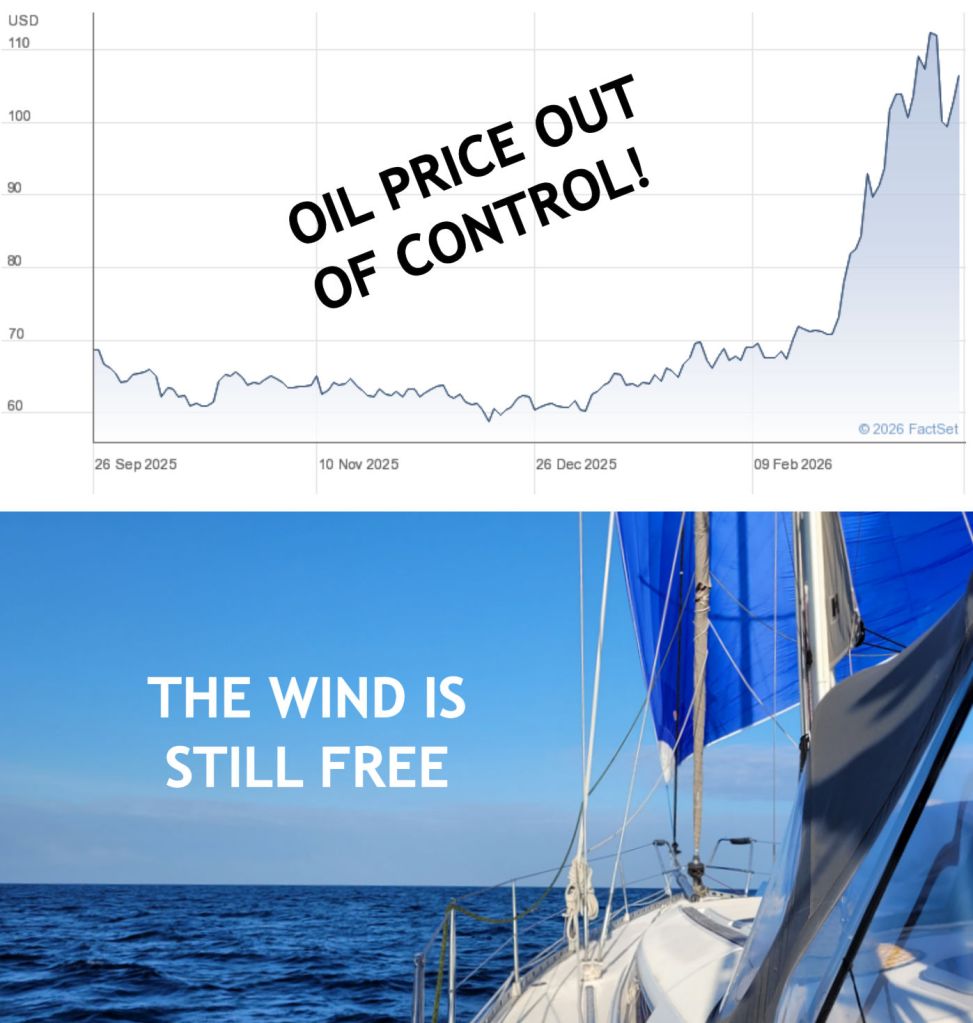
Global shipping continues to feel the impact of fuel price volatility. What used to be manageable fluctuations have turned into sharp and often unpredictable swings, driven by geopolitics, supply constraints, and shifting regulations. For operators, especially those working on tight margins, fuel is no longer just a cost—it’s a major uncertainty.
Nowhere is this felt more clearly than in the Pacific.
The Pacific Reality
The Pacific region presents a unique challenge. Distances are vast, infrastructure is often limited, and fuel availability can be inconsistent or expensive—particularly for island nations and remote trade routes.
For operators in this region:
- Fuel logistics are more complex and costly
- Supply chains are more vulnerable to disruption
- Price volatility hits harder due to limited alternatives
In many cases, fuel has to be imported over long distances, adding layers of cost and dependency. This makes the Pacific not just a high-cost environment, but also a high-risk one when it comes to energy.
At the same time, the Pacific is one of the most wind-rich regions in the world.
Wind as a Local Advantage
Wind is freedom, not controllable and available everywhere.
In the Pacific, this is more than a principle—it’s a practical reality. Trade winds are consistent, predictable, and span enormous distances. They represent a reliable energy source that is already present along the very routes vessels are operating.
Unlike fuel, wind doesn’t need to be delivered. It doesn’t depend on infrastructure. It doesn’t fluctuate in price.
And importantly, it can be used directly.
Why Soft Sails?
Among the various wind propulsion technologies available today, soft sails offer a particularly practical solution—especially in the Pacific context.
Soft sails build on a concept that is as old as shipping itself, but they are now re-engineered for modern operations. They are lightweight, adaptable, and relatively simple compared to more rigid or mechanical systems.
Key advantages include:
- Flexibility: Soft sails can be reefed, adjusted, or stowed depending on conditions
- Lower complexity: Fewer mechanical components compared to rigid wings or rotors
- Ease of integration: Suitable for both new builds and retrofits
- Cost-effectiveness: Lower installation and maintenance costs
For vessels operating across dispersed island networks or remote coastal routes, simplicity and reliability are critical. Soft sails deliver both.
Designed for Real Conditions
The Pacific is not just vast—it’s varied. Weather patterns can shift, ports may have limited facilities, and vessels often need to operate with a high degree of independence.
Soft sail systems align well with these realities:
- They can be handled with relatively simple onboard systems
- They don’t require specialized port infrastructure
- They adapt naturally to changing wind conditions
Combined with modern routing software, soft sails can be used strategically—maximising wind assistance when available, and falling back on engines when needed.
This hybrid approach ensures reliability without sacrificing efficiency.
From Concept to Fleet
At TradeSailer, we translate this approach into practical vessel designs tailored for real-world logistics. Our fleet reflects a scalable philosophy—matching vessel size and capability to the needs of specific routes and cargo profiles, while integrating soft sail propulsion from the outset.
The TSP120 is designed for smaller-scale operations and island connectivity. It offers a flexible solution for regional transport, where port infrastructure may be limited and reliability is essential.
The TSP350 sits at the core of the fleet, balancing cargo capacity with operational efficiency. It is well suited for inter-island trade and medium-range routes, where reducing fuel dependency can have a direct impact on operating costs.
For larger-scale logistics, the TSP450 provides increased capacity while maintaining the same wind-assisted philosophy. It enables more efficient transport across longer Pacific routes, where the benefits of consistent trade winds can be fully realised.
Each of these vessels is built around the same principle: use wind where it makes sense, reduce reliance on fuel, and maintain the flexibility required for modern shipping.
Supporting Local Communities
For many Pacific island nations, shipping is more than logistics—it is a lifeline. It connects communities, enables trade, and ensures access to essential goods such as food, medicine, and building materials. But high fuel costs and unreliable supply chains often make transport expensive and inconsistent.
This is where wind-assisted vessels with soft sails can create real, tangible benefits for local communities.
By reducing fuel dependency, these vessels help:
- Lower transport costs, making goods more affordable at their destination
- Improve service reliability, reducing delays caused by fuel shortages or price spikes
- Strengthen local economies, by enabling more consistent trade between islands
- Increase resilience, allowing communities to remain connected even when global supply chains are disrupted
There is also a knowledge and employment aspect. Operating and maintaining vessels with soft sails opens opportunities for local crews to engage with a technology that is both modern and rooted in traditional seafaring principles. This creates a bridge between heritage and innovation.
Most importantly, wind is a local resource. It belongs to no one, yet benefits everyone. By using it, maritime transport becomes less dependent on external systems and more aligned with regional realities.
Reducing Fuel Dependency
In regions where fuel is expensive and logistically complex, even partial reductions in consumption can have a significant impact.
Soft sails allow operators to:
- Lower overall fuel use
- Reduce exposure to price volatility
- Extend operational range
- Increase energy independence
This is not about eliminating engines. It’s about reducing reliance on them.
In the Pacific, that shift can make a meaningful difference—not just economically, but socially.
Practical Sustainability
Decarbonisation is a global priority, but in the Pacific, it also has a local dimension. Communities are directly affected by climate change, and there is a strong incentive to adopt cleaner technologies.
Soft sails provide:
- Immediate emissions reductions
- A proven and understandable technology
- Compatibility with existing fleets
They don’t rely on future fuel systems or infrastructure. They can be implemented now, with tangible results that benefit both operators and the communities they serve.
A Shift That Makes Sense
The combination of high fuel costs, logistical complexity, and abundant wind makes the Pacific one of the most compelling regions for wind-assisted shipping.
Soft sails stand out because they match the needs of the region:
- Simple
- Reliable
- Effective
They don’t require a complete transformation of the vessel or the system. Instead, they enhance what is already there—while creating broader value beyond the vessel itself.
Take Control
Oil price volatility is not going away. For operators in the Pacific, the impact is amplified by distance and dependency.
Wind offers a way to reduce that dependency—using a resource that is already present, consistent, and free.
And with soft sails, it can be applied in a way that is practical, scalable, and suited to real-world operations—supporting not just logistics, but the communities that depend on it.
Take control of your maritime logistics. Contact us.
FAQ
1. How much fuel can soft sails realistically save?
Fuel savings depend on the route, vessel type, and wind conditions, but reductions of 10–30% are achievable in wind-rich regions like the Pacific. On consistent trade wind routes, this can be even higher over time, especially when combined with smart routing.
2. Are soft sails reliable for commercial shipping operations?
Yes. Modern soft sail systems are designed for durability and ease of use. They can be reefed or stowed quickly and are integrated with onboard systems, allowing vessels to operate safely and predictably alongside conventional propulsion.
3. Why is the Pacific particularly suited for wind-assisted shipping?
The Pacific combines long distances, high fuel costs, and consistent trade winds. This makes it an ideal environment for soft sails, where the availability of wind aligns directly with the need to reduce fuel dependency and improve logistical resilience.

 TradeSailer project